
Zebra Toby Lure: Why It’s So Popular in New Zealand
Fish & Game Southland has described the black-and-gold Toby as New Zealand’s “number one lure”, suggesting it has accounted for more trout than any other lure in the country’s fishing history. That is an informed institutional assessment rather than a measured national catch statistic, but it reflects the lure’s longstanding place in Kiwi angling.
Evidence note: This article is research-based, drawing on official guidance, manufacturer information and the sources listed below; it does not claim personal testing. Read Nordwai’s Editorial Standards.
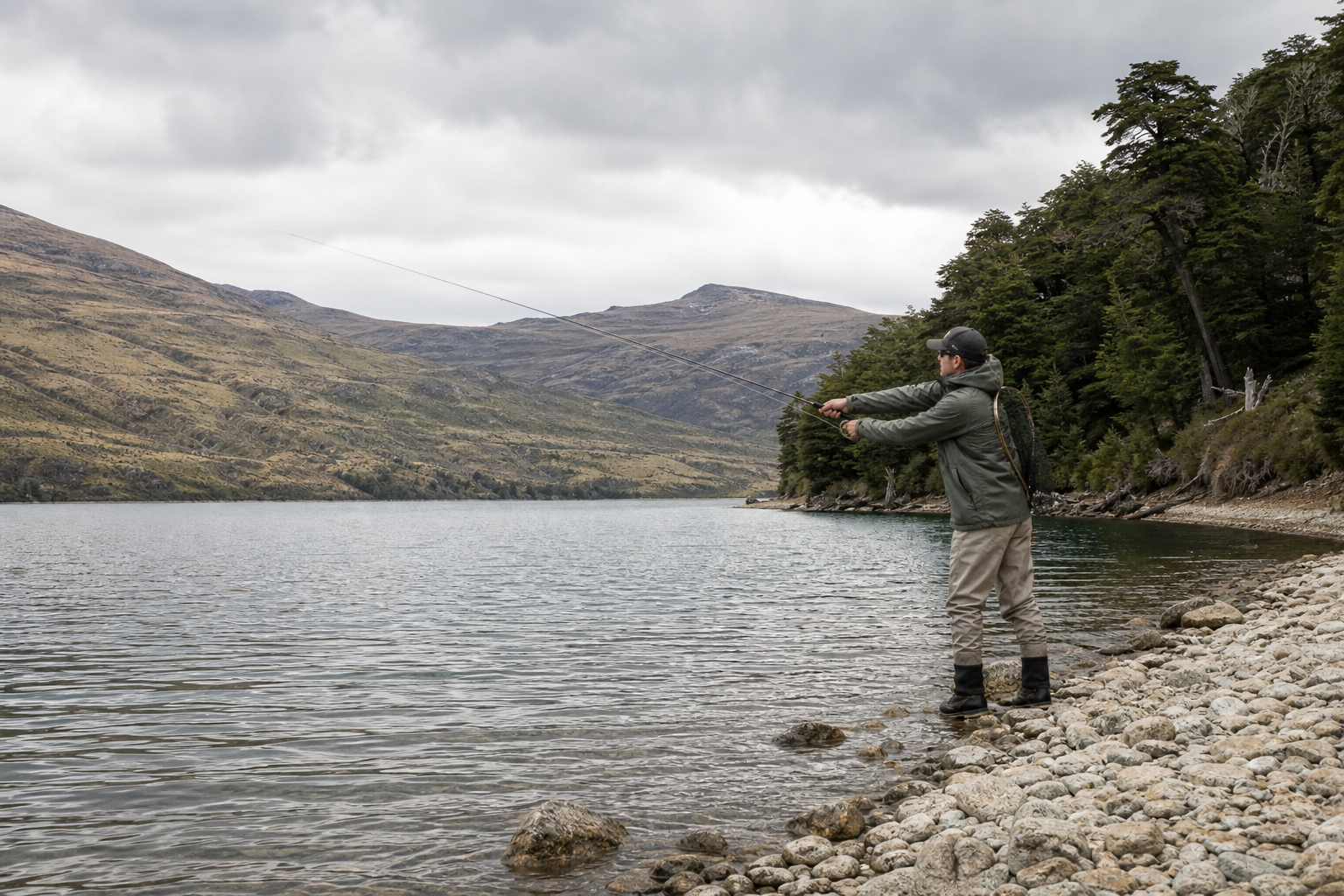
Its appeal is practical. A narrow metal body carries well from lake shores, while the spoon’s wobble alternates a dark striped face with a bright metallic reverse. It works with a simple cast and retrieve, can be swung through river current, and remains available from several New Zealand tackle brands. For many shore anglers, a 10g Zebra Toby is a useful middle ground: an established general-purpose size without unnecessary weight for shallow margins.
“Toby” describes a heritage and a shape
The original Toby was introduced in 1956 by Swedish tackle maker ABU, now associated with Abu Garcia. Historical accounts trace its development to ABU executive Lennart “Len” Borgström, who gained inspiration while sea-trout fishing in Denmark, with Ove Soldemyr involved in developing the distinctive finned form.
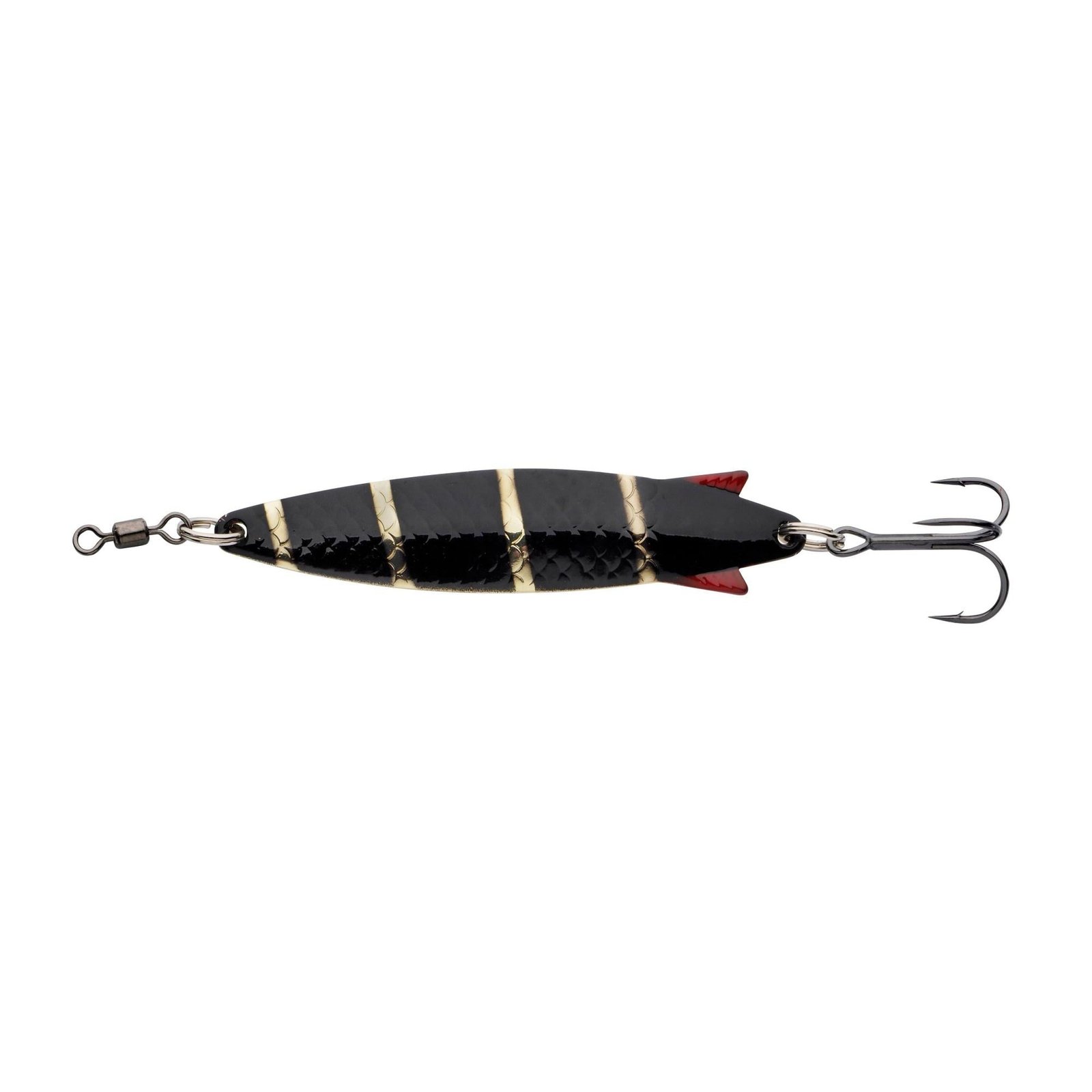
The name referred to tobis, a slender Scandinavian baitfish that influenced the design. The resulting spoon was long and narrow, with small tail fins or wings that helped it retain an active swimming motion despite its slim profile.
In New Zealand, “Toby” has since become shorthand for this general style of spoon. A Zebra Toby might be a Kilwell NZ Toby, a Fishfighter model or another Toby-style product rather than an original ABU lure. Metal thickness, curvature, fittings and action can differ between them, even where the colour and silhouette appear similar.
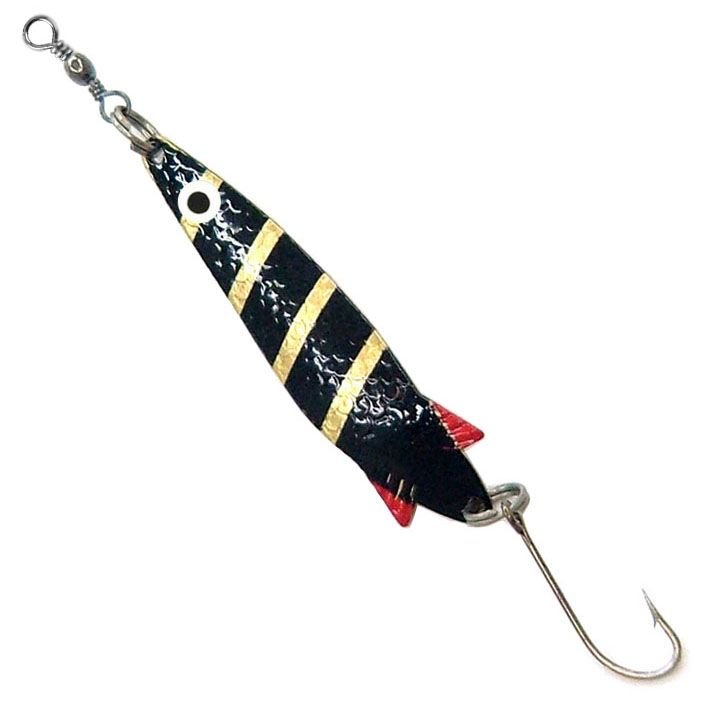
The “Zebra” part usually means a black face crossed by gold stripes, often paired with a bright or unpainted metallic reverse. Product listings may instead use Black & Gold Zebra, black/gold or BGL.
Why the Zebra pattern suits Kiwi trout water
A spoon does not need to copy a particular prey species precisely to attract trout. The Zebra Toby presents movement, contrast and flash: as it wobbles, the black-and-gold face appears and disappears against the brighter reverse. This creates a changing signal rather than one uninterrupted block of colour.
That presentation can be useful under overcast skies or in water carrying some colour. New Zealand specialist sources particularly recommend black and gold for dull or discoloured conditions. It is a starting point rather than a rule, as trout may prefer silver, copper, natural baitfish patterns or another presentation on a particular day.
The shape also addresses a familiar New Zealand fishing problem. Shore anglers often need to cover broad lake margins or wider rivers, and Abu Garcia’s description of the original design emphasises its slim, long-casting profile and relatively low retrieve resistance. Modern Toby-style lures share the narrow spoon concept, although differences in construction mean they will not all cast or swim identically.
Availability and familiarity reinforce each other. The pattern remains represented by several New Zealand suppliers and brands, while its basic cast-and-retrieve method makes it accessible to anglers learning to spin fish. Fish & Game describes spin fishing as a straightforward, active way to present a lure like distressed prey.
Choosing between 7g, 10g and heavier Tobies
Current New Zealand-market examples illustrate the available range. Kilwell offers a 10g Zebra model fitted with a single hook, while the Fishfighter Zebra family is represented in weights from 7g to 28g. Weight affects casting reach, sink rate and the depth at which the spoon can be controlled.
| Weight | Where it fits | Main trade-off |
| 7g (¼ oz) | Smaller water, shallow lake margins and lighter spinning tackle | Less reach in strong wind or across broad water |
| 10g (⅓ oz) | General shore casting, moderate rivers and everyday trout fishing | May still run above trout holding deep |
| 14g (½ oz) | More distance, stronger current or a deeper presentation | More weight may be unnecessary over shallow or snaggy ground |
| 18–28g (⅔–1 oz) | Potentially useful where wind, distance, current or depth demands more weight | Often excessive for close, shallow or light-tackle fishing |
Fish & Game Southland identifies 7g and 10g Tobies as useful shore-casting sizes. The 10g version is a sensible starting point for an angler who wants one spoon for lake edges and moderate river water. Moving heavier makes sense when wind, depth or current creates a defined need, rather than simply because a larger lure appears more capable.

Getting the wobble without overworking it
Begin with a steady retrieve just fast enough to make the spoon wobble. The Toby design can work across different retrieve speeds, so there is room to experiment rather than relying on one fixed pace. If the lure is not swimming cleanly, adjust the speed and check that its fittings move freely.
On a lake, cast along an edge or across a broad margin to search different water. Where more depth is needed, allow the spoon some controlled sink time before retrieving it above weed, stones or other likely snags.
Trout may follow a spoon without striking. A brief increase in speed, a controlled pause or a couple of short turns of the reel can change the presentation. Fish & Game’s spin-fishing guidance recommends varying retrieve speed when fish show interest but do not commit.
In a river, cast across or slightly downstream and maintain enough tension for the current to work the spoon. It can then be allowed to swing through a pool or across the flow before being retrieved. Avoid letting a treble-equipped version drag uncontrolled through rocks, submerged branches or weed.
Where the Toby runs too high
The classic Toby is not a deep-water specialist. Fish & Game Southland describes these spoons as tending to run in roughly the upper 30cm during a normal retrieve. Actual depth changes with lure weight, sink time, line angle, current and speed, but trout holding well below the surface may remain beyond its effective level.
Allowing more sink time or choosing a heavier model can help, provided the bottom is reasonably clear. In deep lakes or strong current, however, a denser lure or another method may reach the fish more efficiently.
The long metal body presents another compromise during the fight. A jumping trout can use it as leverage against the hook, increasing the chance of throwing the lure. A sharp, appropriately sized hook and steady line pressure may help, but cannot remove that mechanical disadvantage.
Finish, curvature and action also vary between makers. “Toby” on the packet does not guarantee the metal thickness, bend or balance of ABU’s original design. If a replacement behaves differently from an old favourite, construction may be the reason.
Single hooks, trebles and New Zealand regulations
Inspect the hook point, split ring and swivel before fishing. Retail configurations are inconsistent: some Toby-style spoons come with a treble, Kilwell sells a 10g Zebra single-hook version, and Abu Garcia’s current Japanese-market remake is supplied without a hook.
That difference matters because permitted tackle is set for the specific water, not simply the wider region. Fish & Game regulations vary by region and fishery, and individual waters may have their own restrictions.
The Taupō Fishing District is administered separately by New Zealand’s Department of Conservation. Its rules permit only single-point hooks and no more than one hook on a lure; a Fish & Game licence does not cover the district. Anglers should check the current official rules for the water they intend to fish rather than assume a shop-supplied hook configuration is legal.
Editor’s judgement
The Zebra Toby’s reputation should not be mistaken for proof that it is always the best lure or colour. Even so, a 10g black-and-gold version remains a defensible first choice for prospecting lake margins or moderate river water, provided its running depth and the local hook rules suit the fishery.
Sources and further reading
- Fish & Game New Zealand: Southland Reel Life, December 2018
- Fish & Game New Zealand: Spin fishing
- Fish & Game New Zealand: Fishing regulations
- Department of Conservation: Taupō trout-fishing rules
- Abu Garcia: TOBY design and history
- Fishingmag.co.nz: Toby brass spoon
- Kilwell: NZ Toby 10g single-hook lure
- Bernsport: Fishfighter Toby Zebra range