Swanndri in the New Zealand Bush: Why the Wool Still Works
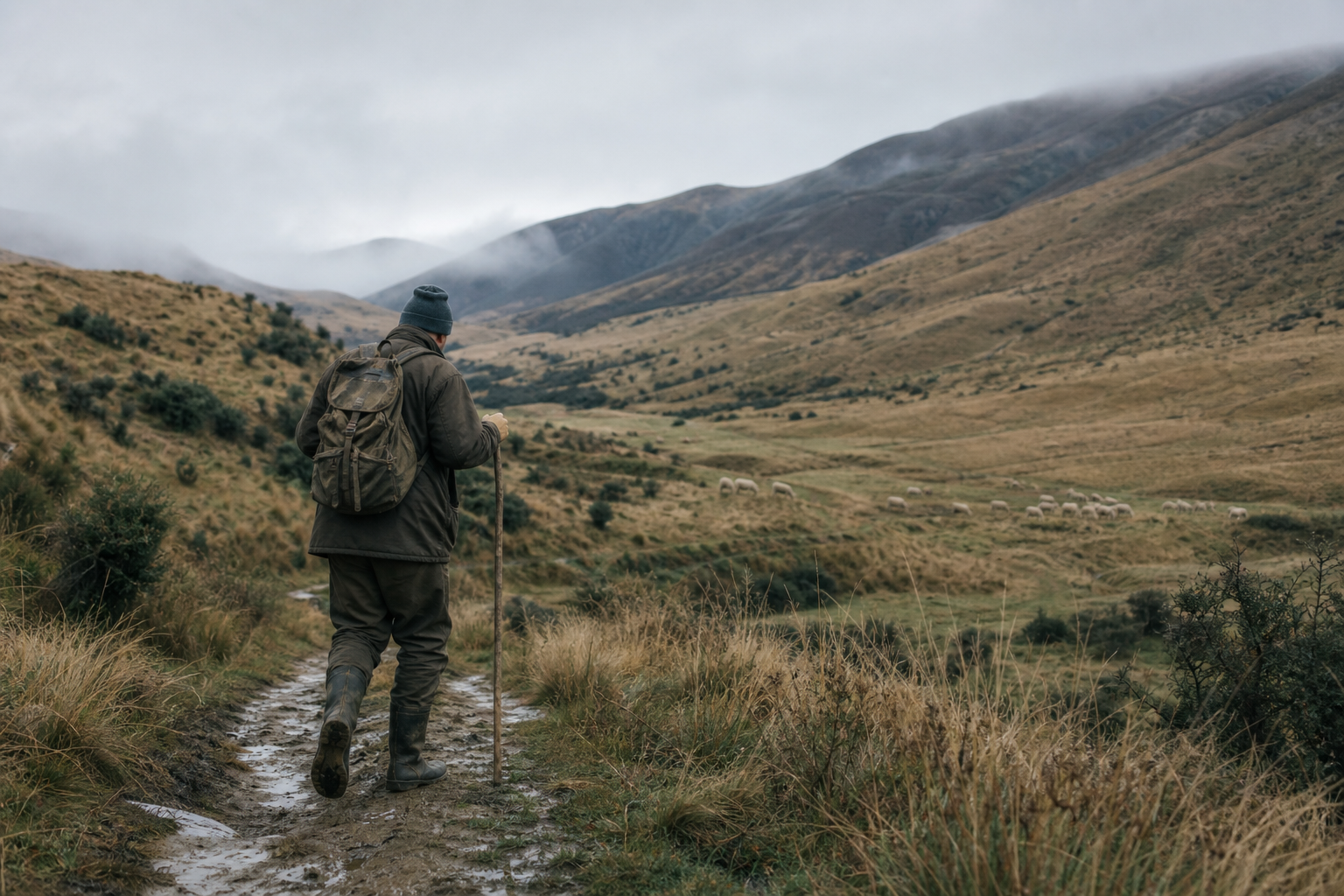
A Swanndri bush shirt makes more sense beside a wind-bent fence line than it does on a lightweight gear spreadsheet. Heavy, loose and made from dense wool, the classic “Swanny” emerged from New Zealand workwear rather than the modern pursuit of minimum pack weight.
Evidence note: This article is research-based, drawing on manufacturer information, museum and reference material, and the sources listed below; it does not claim personal testing. Read Nordwai’s Editorial Standards.
That distinction explains both its usefulness and its limitations. A Swanndri can provide substantial insulation and coverage in cold, windy or brushy country, but it is not a waterproof shell and the heavier models are poorly suited to warm climbs or trips where low pack weight matters.
The official name is Swanndri, with two n’s; “Swandri” is a common misspelling. More than a century after the trademark was registered, the brand’s wool bush shirts still occupy a practical niche between work shirt, insulating layer and weather-resistant outer garment.
From a Taranaki tailor’s shop to a New Zealand icon
Swanndri’s story began with William Henry Broome, an English-born tailor working in New Plymouth on New Zealand’s North Island. Broome developed a short-sleeved, lace-front wool work shirt and registered the Swanndri trademark on 23 December 1913.
The early garments were dipped in a proprietary weatherproofing solution. Uneven shrinkage during that process contributed to the original one-size approach.
The familiar hooded silhouette came later. Swanndri’s company history and New Zealand’s national museum, Te Papa, date the addition of long sleeves, a hood and the traditional olive colour to 1927, crediting tailor John McKendrick; the trademark rights eventually passed to McKendrick’s company in 1964.
By the 1950s and 1960s, the bush shirt had become established clothing for farmers, shepherds, hunters, timber workers and government deer cullers. Their work often combined rough country and changeable weather with periods of hard movement followed by time spent standing still.
That association helped the Swanny become part of New Zealand’s visual identity. It later crossed into urban fashion, while retaining its links with rural labour and the bush, a transition recorded by the Te Ara Encyclopedia of New Zealand.
Why dense wool remains useful in rough country
The traditional Swanndri formula combines thick wool fabric with a generous cut and more coverage than an ordinary shirt. The result is not especially light, but it suits cold, changeable conditions where warmth and freedom of movement take priority over compact packed size.
Wool fibres have a natural crimp that helps trap insulating air. They can also absorb and release moisture vapour, which can improve comfort during stop-start work; Woolmark’s fibre guidance describes wool as naturally breathable and resistant to light surface moisture.
Water resistance does not make a wool bush shirt waterproof, and sustained rain will eventually overwhelm it. On exposed backcountry trips, a Swanndri belongs within a layering system that also includes a seam-sealed waterproof jacket, in line with the New Zealand Mountain Safety Council’s treatment of warm layers and waterproof outerwear as separate essentials.
Heavy wool is most at home in cold wind, light rain and brushy terrain. The fabric and long, loose cut provide coverage when bending, climbing over a gate or working with tools, making the format well suited to fencing, stock work, winter hunting and camp duties.
Original, Mosgiel or Ranger?
Swanndri’s three central men’s wool bush shirts share a workwear character but are not interchangeable. Fabric density and front construction affect how easily each garment vents, layers and moves between active and stationary use.
| Model | Wool fabric | Front design | Most natural role |
| Men’s Original Wool Bushshirt | 475gsm | Lace-up pullover | Cold, exposed work and low-to-moderate-output use |
| Men’s Mosgiel Wool Bushshirt | 475gsm | Full two-way zip | Heavy-wool coverage with easier ventilation and access |
| Men’s Ranger Wool Bushshirt | 345gsm | Lighter bush-shirt format | More mobile work, layering and milder conditions |
The 475gsm figures describe fabric weight per square metre, not the total weight of a finished garment. They nevertheless indicate why the Original and Mosgiel are more substantial than the 345gsm Ranger.
The Original: maximum coverage in the classic pattern
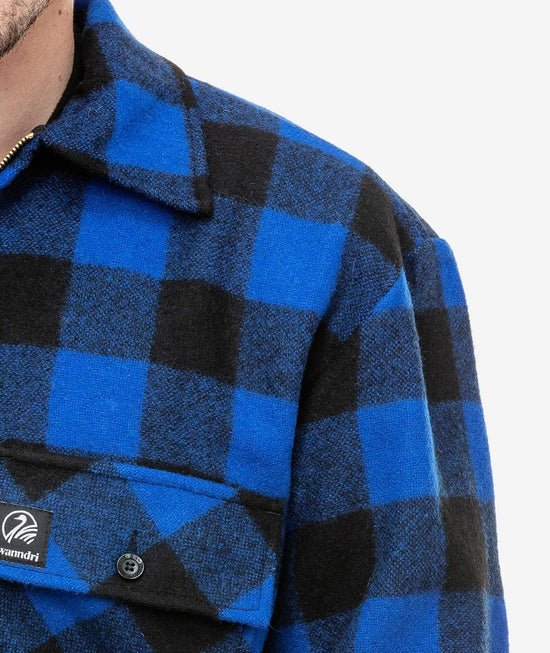
The Men’s Original Wool Bushshirt with Lace-up Front is the clearest continuation of the traditional Swanny idea. Its 475gsm New Zealand-wool outer is paired with an oversized cut, extended body coverage, side splits and underarm gussets.
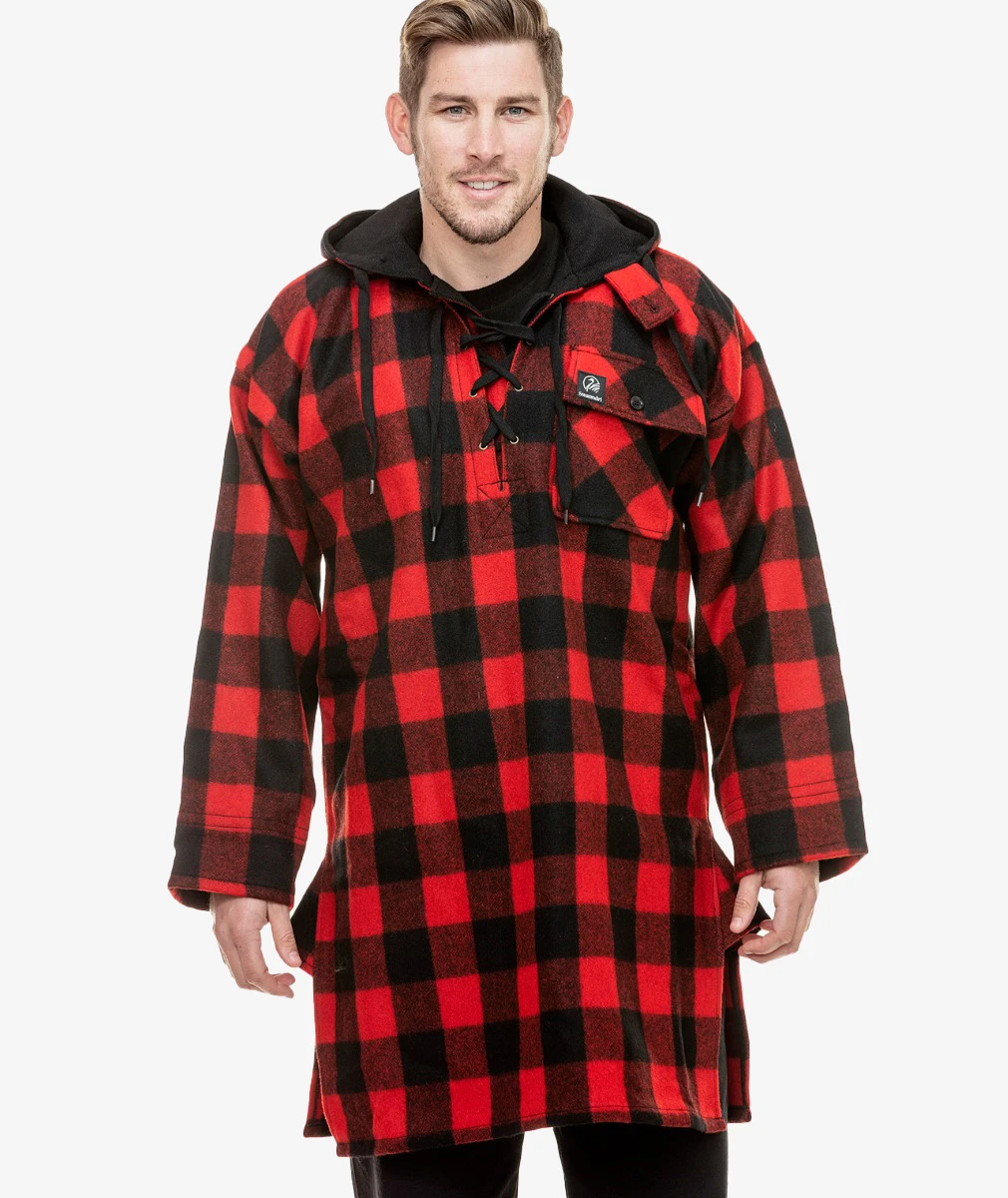
A reinforced hood, adjustable cuffs and storm-flapped lace opening add coverage around exposed areas. Its one-piece body construction also eliminates shoulder seams, while the gussets and side splits support freedom of movement.
The generous shape leaves room for base and insulating layers and allows the wearer to reach, crouch and handle equipment without pulling the hem sharply upwards. It is particularly well matched to winter farm work, low-to-moderate-output hunting and cold camp duties.
The trade-off is limited climate control. A lace opening cannot release heat as quickly as a full-length zip, while the garment’s warmth and bulk make it a poor match for fast summer travel or minimalist backpacking.
The Mosgiel: heavy wool with easier ventilation
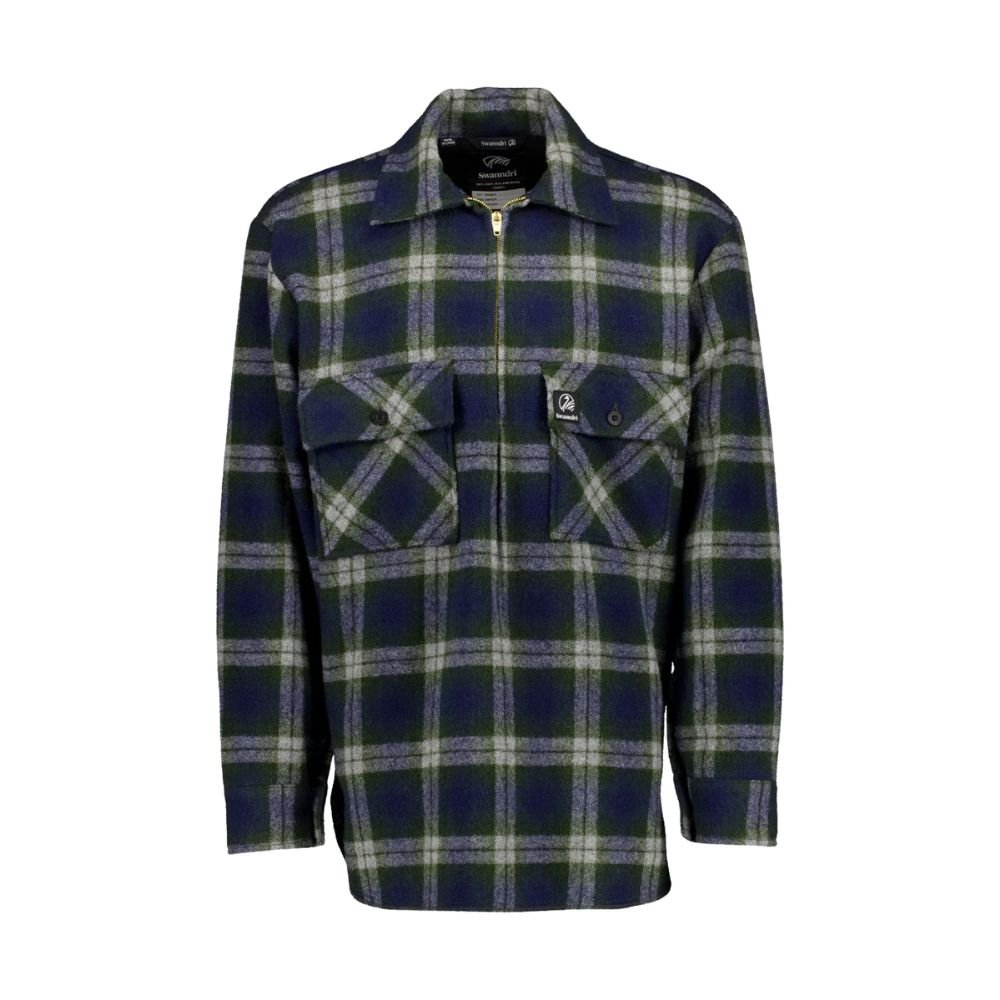
The Men’s Mosgiel Wool Bushshirt with Zip-up Front retains the 475gsm wool of the Original but replaces the lace-front pullover arrangement with a full two-way zip. It is the more adaptable format when a day involves repeated transitions between walking, working and standing.
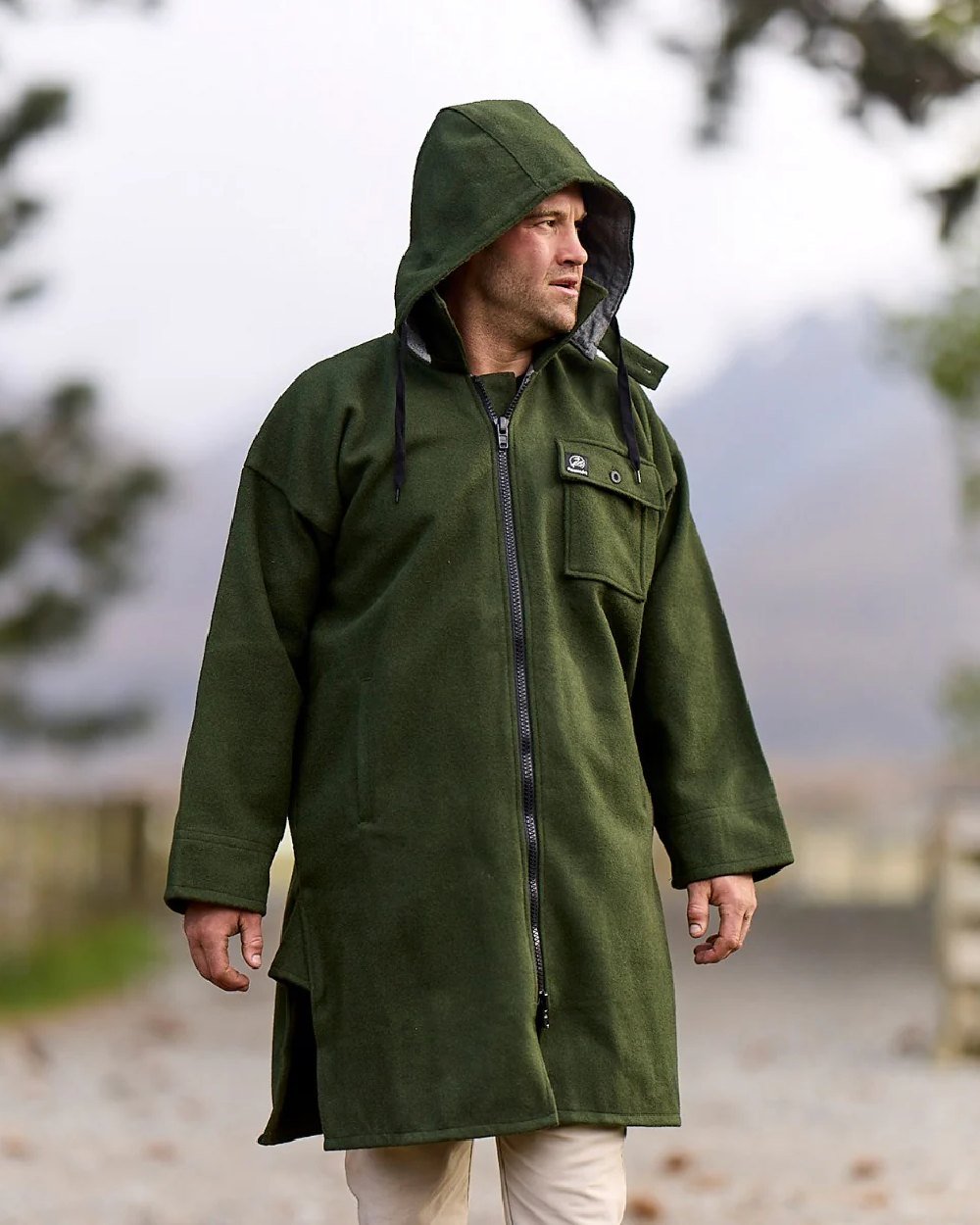
Opening the zip provides faster ventilation during strenuous work or a climb. It also makes the garment easier to put on and remove without disturbing every layer underneath.
Its dense fabric still brings the same fundamental penalties as the Original: considerable bulk, slower drying than synthetic layers and the potential to overheat during sustained movement. The Mosgiel is therefore best viewed as a more controllable heavy bush shirt, not a lighter one.
The Ranger: the more mobile wool option
At 345gsm, the Men’s Ranger Wool Bushshirt uses substantially lighter fabric than the Original and Mosgiel. It remains a wool work shirt, but is better placed for active use, milder conditions and layering beneath another outer garment.
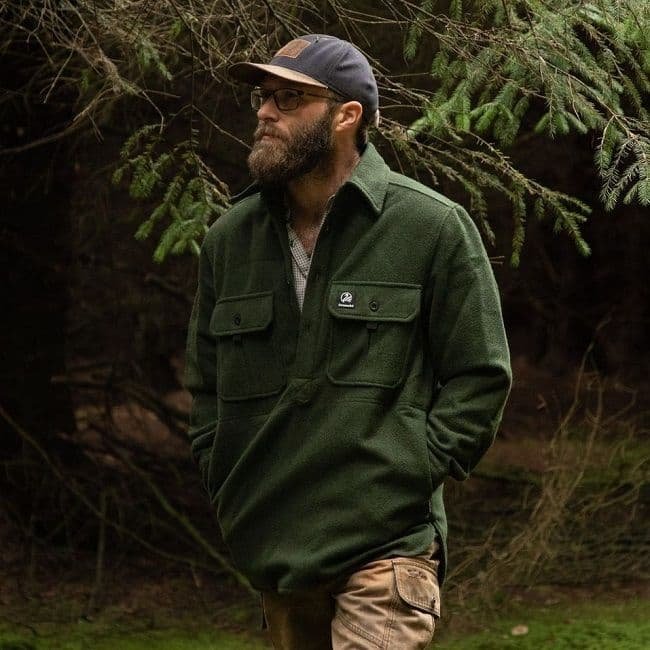
The Ranger is the logical starting point for someone who wants wool without the same warmth and bulk as the 475gsm models. It can function as a mid-layer in colder conditions or as outer workwear when less insulation is required.
The lower fabric density means less warmth than the Original or Mosgiel. That can be a worthwhile exchange when moving frequently or working at a higher output.
Building a layering system around a Swanny
A coarse wool bush shirt is usually more comfortable over a moisture-managing base layer than directly against the skin. A light wool or synthetic top can manage perspiration while separating the wearer from the heavier outer fabric.
The Original and Mosgiel are deliberately oversized to accommodate several layers, but that room can also encourage over-dressing. Heavy wool may become excessive on steep ground, in warm weather or during sustained high-output travel.
Any waterproof layer needs enough room to fit over the bush shirt without restricting the shoulders. A close-cut hiking shell may not accommodate the oversized Swanndri silhouette, so buyers should compare garment measurements rather than relying only on the familiar size printed on the label.
Drying opportunities also matter on multi-day trips. Wool manages moisture effectively and can remain comfortable in damp conditions, but synthetic layers generally dry faster, which is important when travelling without dependable drying conditions.
New Zealand wool does not mean New Zealand-made
Swanndri remains New Zealand-owned, and the three bush shirts discussed here use New Zealand-grown wool identified by the company as ZQRX-certified. The programme’s owner, Zentera, now uses the name ZQ+ (formerly ZQRX), with a framework covering traceability, farm standards and continuing improvement across animal, environmental and social indicators.
The origin of the fibre should not be confused with the place where a finished garment is sewn. Swanndri states in its customer information that most production moved offshore in 2005, so buyers concerned about manufacturing origin should check the label or current information for the individual garment.
Care that preserves the shape and fabric
Swanndri specifies a gentle wool cycle or hand washing for its classic bush shirts, followed by drying flat. Tumble drying should be avoided because heat and agitation can shrink or distort wool.
Who still has a place for a Swanndri?
The classic bush shirt remains convincing for people whose outdoor days involve cold wind, rough vegetation and irregular movement. Farmers, hunters, forestry workers and winter campers are more likely to benefit from its warmth and coverage than travellers trying to minimise pack weight.
It is less persuasive for fast, high-output travel or routes where clothing must pack down small and dry quickly. Synthetic layers generally have an advantage in drying speed, while the heavy Original and Mosgiel can also become uncomfortably warm during sustained exertion.
Swanndri’s enduring value lies in treating the bush shirt as specialised cold-country workwear rather than an all-purpose technical shell. Used for the conditions and activities it suits, the design still has a credible place in rugged terrain.
Sources and further reading
- Swanndri: The History of Swanndri
- Te Ara Encyclopedia of New Zealand: The Story of Swanndri
- Swanndri: Men’s Original Wool Bushshirt with Lace-up Front
- Swanndri: Men’s Mosgiel Wool Bushshirt with Zip-up Front
- Woolmark: Wool Is Naturally Breathable
- New Zealand Mountain Safety Council: Clothing and Equipment
- Zentera: ZQ+ Wool Programme